Fear No More
Beethoven’s Egmont Overture (1810)
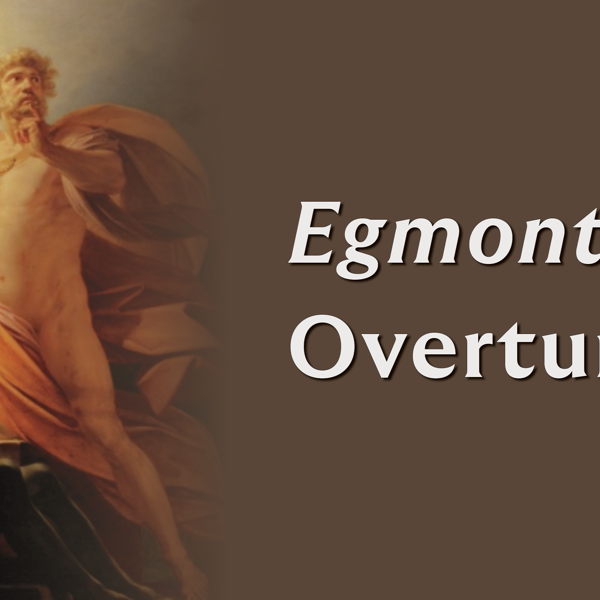
Beethoven’s Egmont Overture is one of his many concert overtures depicting different kinds of heroic individuals. The Egmont Overture is derived from the incidental music Beethoven wrote for Goethe’s play of the same name (Egmont, 1788). The play is a historical drama of the sixteenth-century struggle of the Count of Egmont against the Duke of Alba for the freedom of the Netherlands. In the play, Egmont boldly confronts Alba’s tyranny, knowing that it will cost him his life. His sacrifice is not in vain: it will ensure the downfall of Alba. Beethoven condenses one of the primary messages of Goethe’s play into a searing overture: the only way to defeat tyranny is through an equally strong gesture of defiance, although such an act carries with it great peril. Egmont resembles Prometheus, whose resistance to tyranny through his theft of fire led to his imprisonment, but also humanity’s salvation. However, this connection goes farther, as Franz Welser-Möst describes below:
Franz discusses examples of promethean heroes and the difficulty of freedom. Features an excerpt of the Orchestra’s 60th Anniversary TV Special (1978), with Lorin Maazel conducting a performance of Beethoven’s Egmont Overture.

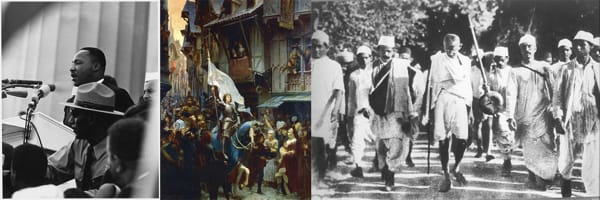
Franz describes another aspect of being a promethean hero, – the ability to conquer fear. To stand up against tyranny and the status quo is difficult and frightening. Any act of resistance requires that one defeat fear doubly — in standing up to tyranny and facing the unknown consequences. Promethean figures like Dr. Martin Luther King, Jr, Mahatma Gandhi, Joan of Arc, and Egmont stood up and, through their heroism, and sacrifice, gave others the strength to stand. Although they ultimately lost their lives in pursuit of freedom (just as in the stirring conclusion to the Egmont Overture), the fire that their heroic spark started would become a blaze.
You can listen below to the rest of Egmont’s promethean journey — conflict, hope, despair, and salvation — through a selection of audio clips from the Orchestra archives.


— Dr. Alexis Lawler worked in The Cleveland Orchestra Archives and completed The Prometheus Project while a Historical Musicology PhD student at Case Western Reserve University.