Prometheus’s Prelude
Beethoven's Overture to The Creatures of Prometheus (1801)
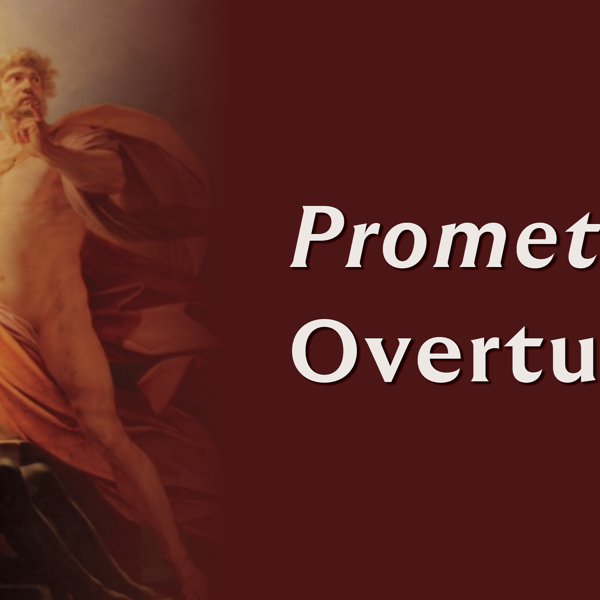
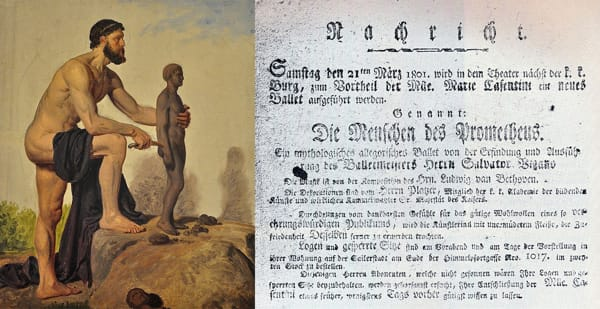
Perhaps the most overt example of Beethoven’s interaction with the idea of Prometheus was his first ballet, The Creatures of Prometheus. This ballet was the fruit of a collaboration between him and Salvatore Viganò, Vienna court ballet master and fellow artistic progressive. Viganò’s adaption of the Prometheus myth for Beethoven’s ballet was based on a French Enlightenment-era retelling that cast Prometheus as both the creator of humanity and its guide in becoming truly human through the power of the performing arts.
The connection between Prometheus and Beethoven’s overture to The Creatures of Prometheus is not programmatic, but is instead abstract and philosophical. Two aspects of the overture, as highlighted by musicologist Paul Bertagnolli, contribute to this interpretation. The first is found in the overture’s opening chords, as can be heard in this audio clip. Beethoven violates orthodox harmonic practice by starting the overture with a sequence of chords that harmonize a different key than the rest of the overture. This “transgression” against the old musical order mirrors that of Prometheus against the gods. The second is the energetic theme that Beethoven introduces in the faster allegro section. This theme prefigures the main theme used for joyful conclusion of the ballet, in which the “creatures of Prometheus” have attained true “animation through the power of the arts."1 These two features, as well as the overture’s high spirits, help connect the overture to the ballet’s uplifting Promethean ideal.
The Cleveland Orchestra's Centennial Season ended with Music Director Franz Welser-Möst’s “Prometheus Project,” a special presentation of all nine of Beethoven's symphonies, examined through the metaphor of Prometheus, the daring Greek Titan.

1 Paul Bertagnolli, Prometheus in Music: Representations of the Myth in the Romantic Era (New York: Routledge, 2007, 2016), 36-38.
— Dr. Alexis Lawler worked in The Cleveland Orchestra Archives and completed The Prometheus Project while a Historical Musicology PhD student at Case Western Reserve University.