What Utopia Feels Like
Beethoven’s Symphony No. 6, "Pastoral” (1808)
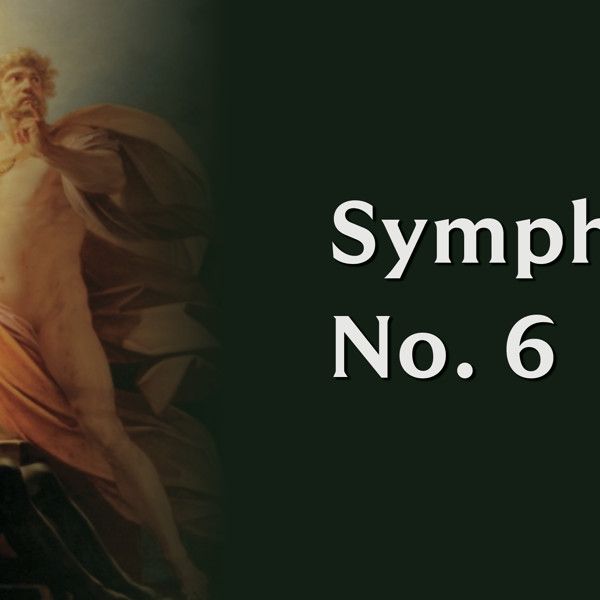
Beethoven’s “Pastoral” Symphony premiered on the same concert as the Fifth Symphony (December 22, 1808). The two works were quite different: Whereas the Fifth was a difficult journey from darkness to light, the “Pastoral” was a genial, warm-hearted journey through the countryside. The “Pastoral” symphony is the most programmatic of Beethoven’s symphonies: Each of its five movements bears a title loosely depicting the experiences of an anonymous figure moving through the countryside. However, the “Pastoral” is one of Beethoven’s most forward-looking compositions, as Music Director Franz Welser-Möst describes in the video below.
Music Director Franz Welser-Möst discusses another side to Beethoven’s style — pastoral and distinctly non-heroic — and connects it to Romantic-era ideas of sensation and feeling.


There seems to be a conscious effort by Beethoven to prioritize sensation and emotion over form and literal depictions of nature in the “Pastoral”. According to Beethoven scholar Lewis Lockwood, Beethoven sought to find the best of both worlds in his “Pastoral”: to illustrate these naturalistic scenes through music that would paint them in tones, but, above all, to have the music be, in Beethoven’s words, “‘understood without a description, as it is more feeling than tone-painting.’”1 Essentially, by drawing on musical tropes of nature to cue a listener into the general ambiance, Beethoven could focus his compositional efforts on the expression of emotion. This is what makes the symphony truly Romantic. Composer Robert Schumann felt as much, writing that Beethoven’s remarks about the symphony provided “ ‘an entire aesthetic system for [future] composers.’”2

Whereas works like the “Eroica” or Egmont celebrate heroic individuals and their struggles, the “Pastoral” ultimately seems to celebrate the strength of community and harmony – whether it be of nature or people. Franz compares the last movement of the “Pastoral” to the first of the “Eroica”: Both of their main themes are derived from the notes of one chord, which he describes as, “the harmony itself is the theme.” However, both themes are very different, which suits Beethoven’s aims in each symphony. The opening theme of the “Eroica” constantly fights off dissonance, and is about heroism, conflict, and victory; in contrast, the theme of the last movement of the “Pastoral” celebrates consonance, signifying, as described, the harmony among different people.


In line with Franz’s musical analysis and the festival’s promethean theme, musicologist Richard Will has interpreted the “Pastoral” (composed during the heyday of Napoleon’s empire in Europe) as an “effort to conjure a world protected from violence, degradation, human foible” in which the people escape calamity by the “apparent intervention of a higher power” and are inspired to “redeem [themselves].”3 If works such as the “Eroica” or the Fifth Symphony are about heroic conflict and the move from darkness to light, then this symphony is about the “utopia” that emerges from that struggle: a beautiful portrait of a “pastoral arcadia.”4
1Lewis Lockwood, Beethoven: The Music and the Life (New York: W.W. Norton, 2005), 225.
2David Wyn Jones, “Pastoral” Symphony (New York: Cambridge University Press, 1995), 82.
3Richard Will, The Characteristic Symphony in the Age of Haydn and Beethoven (New York: Cambridge University Press, 2002), 156-157.
4Maynard Solomon, Beethoven, second revised edition (New York: Schirmer Books, 1998), 404.
— Dr. Alexis Lawler worked in The Cleveland Orchestra Archives and completed The Prometheus Project while a Historical Musicology PhD student at Case Western Reserve University.