“Als ob” or Making Old New Again
Beethoven’s Symphony No. 8 (1812)
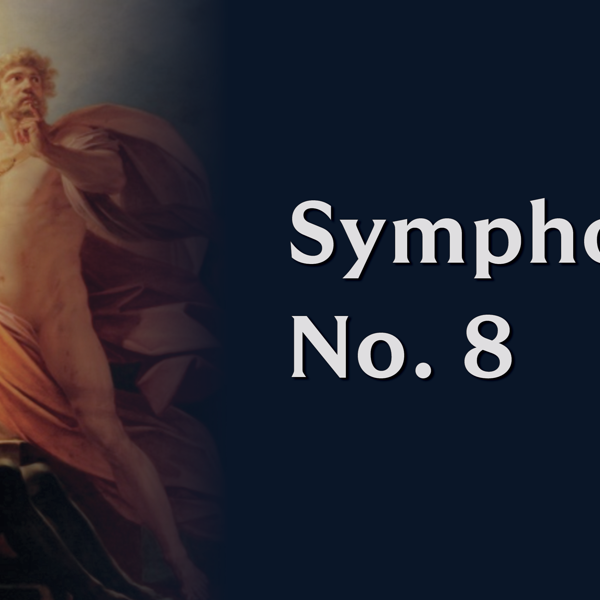
The Eighth Symphony generally has been regarded as the slightest of Beethoven’s mature symphonies because of its short length, lighter tone, and frequent return to the musical styles and forms of the eighteenth century. However, beneath the gaiety of its surface lies much complexity and a promethean connection. Listen below to Music Director Franz Welser-Möst describe how he came to appreciate the symphony in a new light when he viewed it through the lens of “als ob” (as if):
Franz discusses how the Eighth Symphony is a reinvention of the symphonic past.

The idea of “als ob” (as if) is a sophisticated way of returning to the past: doing something “as if” it were something else. Instead of simply copying or repeating older musical styles or forms, Beethoven reinvents them by infusing musical elements of his time. Beethoven scholar Lewis Lockwood describes this “reanimation of the classical manner” as “an expression of [Beethoven’s] sense of freedom.”1 If in the Seventh Symphony, Beethoven explored rhythm as an expanded dimension of music, then in the Eighth, Beethoven is reminding us that there is much that the musical past can tell us and that one does not need to be a pioneer and revolutionary to have something to say.
You can hear some of this in the third movement. Beethoven returns to the minuet and trio, a distinctly eighteenth-century dance form and, prior to his popularization of the scherzo, the typical third movement of a classical symphony. However, Beethoven’s minuet freely mixes new and old: The middle trio section is scored in imitation of its roots (a literal trio of musicians), but, as Franz remarks, when Beethoven brings in the strings, the sound changes to something much more romantic. In the minuet sections of the movement, Beethoven playfully comments on the minuet’s grand and sometimes pompous associations with past nobility through exaggerated accents and dynamic shifts.
A Musical Clock: Symphony No. 8, II: Allegretto Scherzando
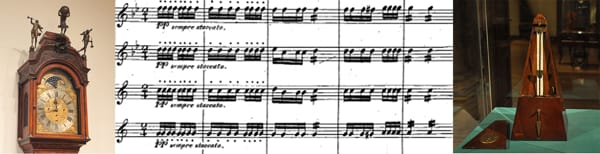
The superficially simple second movement is an excellent example of this engagement with the past. Dominated by a musical imitation of a ticking clock, this movement is commonly considered to be a representation of the beating of a metronome, a new device for which Beethoven should great enthusiasm.2 However, this interpretation is now considered apocryphal.3 In line with the idea of “als ob,” the movement can be heard (and likely was heard at the time) as an imitation of a major classical work by Beethoven’s teacher, Haydn, Symphony No. 101 in D Major, “The Clock.” Additionally, this movement harkens back to an older meaning of Scherzo as a “joke” – with this movement then being “a little joke.”4 Listen below to the opening of this movement, taken from a 1936 recording of The Cleveland Orchestra, Artur Rodzinski conducting:
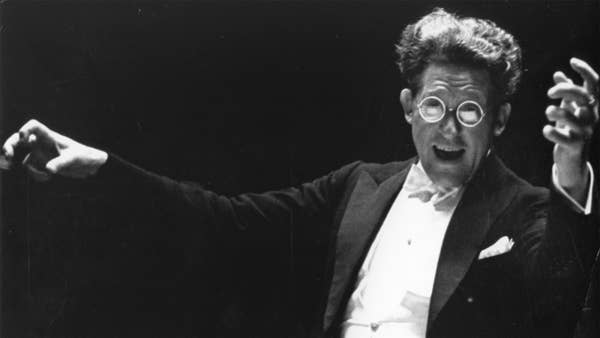
However, according to musicologists Martin Geck and Lewis Lockwood, it is not simply a return to an older classical model, but a sophisticated, sly play on the idea of a musical clock. Lockwood and Geck both note how the movement playfully deconstructs the idea both of a clock and also of a musical imitation of a clock: unlike a clock’s precise, regular mechanisms, those of this movement are out of whack: timings get off progressively, phrases get stuck in ruts, and there are unexpected surprising shifts in tone.5 Listen to the remainder of the movement below in a 2011 recording with Franz conducting:

To a promethean figure in art, creating something that can inspire and uplift others does not require the work be on an epic scale, of vast dimensions, or completely new and revolutionary. There is value in the small and the already-done, and Beethoven’s Eighth Symphony stands as a reminder of this truth.
1Lewis Lockwood, Beethoven’s Symphonies: An Artistic Vision (New York: W.W. Norton, 2015): 171.
2The story behind this attribution is that at an 1812 farewell dinner in Vienna for Beethoven (before he left for Linz to visit his brother and work on his Eighth Symphony), Beethoven composed a canon in honor of Maelzel and his device, the chronometer (later renamed the metronome). The tune of this canon later became the source of the main theme for the symphony’s second movement. Source: Anton Felix Schindler, Beethoven as I Knew Him, translated by Constance S. Jolly, edited by Donald W. MacArdle (Meneola, NY: Dover, 1996), 170-171.
3Martin Geck, Beethoven, translated by Anthea Bell (London: Haus Publishing, 2003), 87.
4Lockwood, Beethoven’s Symphonies, 180-181.
5Geck, Beethoven’s Symphonies: Nine Approaches to Art and Ideas, translated by Stewart Spencer (Chicago: University of Chicago Press, 2017), 129-130; Lockwood, Beethoven’s Symphonies, 180-182.
— Dr. Alexis Lawler worked in The Cleveland Orchestra Archives and completed The Prometheus Project while a Historical Musicology PhD student at Case Western Reserve University.