Mark Kosower on Martinů
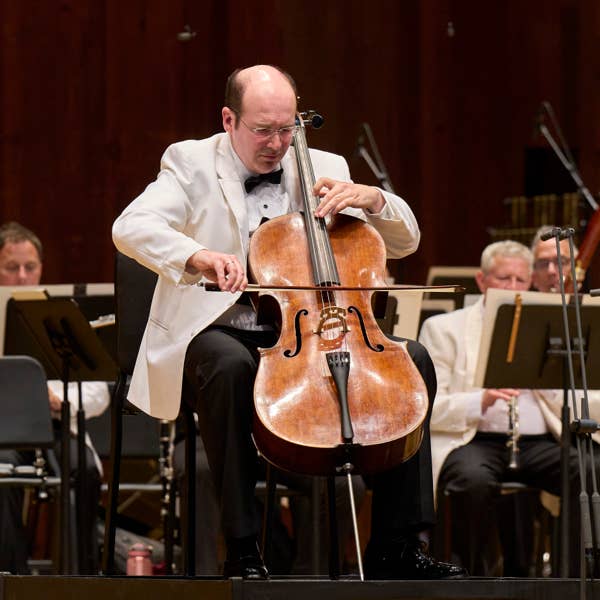
The Cleveland Orchestra’s Principal Cello Mark Kosower performs the First Cello Concerto of Bohuslav Martinů at Blossom this summer. We sat down with him to learn more about this work and what makes Martinů’s music so special.
When did you first learn about this concerto? Have you played it before?
I first encountered this work in college when my sister (also a cellist) performed it on a master’s degree recital at Indiana University. Her performance inspired me, and I added it to my list of concertos I want to learn. It’s always been one of those pieces that’s grabbed my attention, but this will actually be my first time performing it. It’s not always easy getting an orchestra to program something unfamiliar. Fortunately, The Cleveland Orchestra values presenting both famous and lesser-known works from a wide variety of genres, and they agreed to program this piece. I love Martinů’s music because of the distinctive Czech flavor in its melodies, which contrasts with a lot of exciting, rhythmic energy. This concerto has all that and more.
This work has three different versions. Why is that?
It’s pretty unusual for a concerto to have so many revisions; the only other one I can think of offhand is Brahms’s First Piano Concerto. Sometimes a composer has brilliant ideas with an important message behind it but struggles to put the pieces together. Martinů first wrote this concerto in 1930 and later revised it two more times. The work is very Neoclassical — you can hear influences of Stravinsky — so to fit in within that aesthetic, the first version was deliberately scored for chamber orchestra and the solo part was more integrated into the ensemble and less “stand out” like concertos in the Romantic tradition. By the time the third version rolls around in 1955 — which is the version I’m playing — the concerto is scored for full orchestra with a flashy and virtuosic solo part. However, the work retained its neoclassical characteristics with light textures, crisp rhythms, and conversational exchanges.
What’s your preparation like for this piece?
Alongside learning the notes, I like to dig deeper to learn about the context in which the piece was written, especially what was going on in the world. I always say that working on a piece of music is like a mosaic, because you start by identifying little things before it evolves into a much bigger image. What’s challenging with Martinů is ensemble coordination for the complex syncopated rhythms, so there’s quite a bit to work out in rehearsals with the Orchestra. It should have a buoyant, folklike feel to it; if you approach it from the angle of heavy, Germanic music, it won’t work.
Are there other recordings or interpretations that have inspired you as you prepare?
I’ve listened to a performance by Pierre Fournier, who Martinů wrote the concerto for. I’ve always been an admirer of his playing. My teacher and mentor János Starker also championed the piece and, later in his life, recorded Martinů’s three cello sonatas with the composer’s lifelong friend, pianist Rudolf Firkušný. More recently, Sol Gabetta also has a very impressive recording of the work with the Berlin Philharmonic on that orchestra’s Digital Concert Hall.
It must be nice to have past recordings to draw from, but to also bring your own ideas to the table.
Certainly! No matter what we do, we’re products of our time, and so, by default, we bring aspects of our present to music-making. But at the same time, learning from traditions that have been passed down and from people who actually knew the composer can really shed light on the music.
This also seems to be the year of Martinů at TCO. The Orchestra played his Third Symphony at Severance in March, there’s your concerto performance at Blossom, and then you’ll all play his Second Symphony at Severance in the fall before taking it on tour to Europe. Do you think his music is having a resurgence?
Yes! The Cleveland Orchestra commissioned and premiered three works by Martinů — the Rhapsody-Concerto for viola and orchestra, the tone poem The Rock, and the Second Symphony — so we have a real connection to the composer. Martinů is a name a lot of people know, yet his music is not as widely performed as a lot of other composers due to a variety of circumstances. He ended up being very successful in America, but, as history has taught us, what makes one successful in the short term does not necessarily lead to continuing performances. However, with Martinů, there is such quality construction, depth of musical content, and general appeal that I think his presence on concert programs is only going to grow.
Any final thoughts?
Performing this work is going to be a lot of fun. It’s such uplifting, inspired music that it’s hard not to enjoy. I also think it’s perfect for a summertime performance at Blossom. There are certain pieces that become even more magical outdoors, and I think this concerto is going to be one of them.
— Mark Kosower is Principal Cello of The Cleveland Orchestra and holds the Louis D. Beaumont Chair.