A Conversation with Frank Rosenwein
On November 5, 7 & 8, Principal Oboe Frank Rosenwein premieres Distant Lands, a concerto for oboe and strings by American composer Adolphus Hailstork. We caught up with Frank to hear his thoughts on this debut.
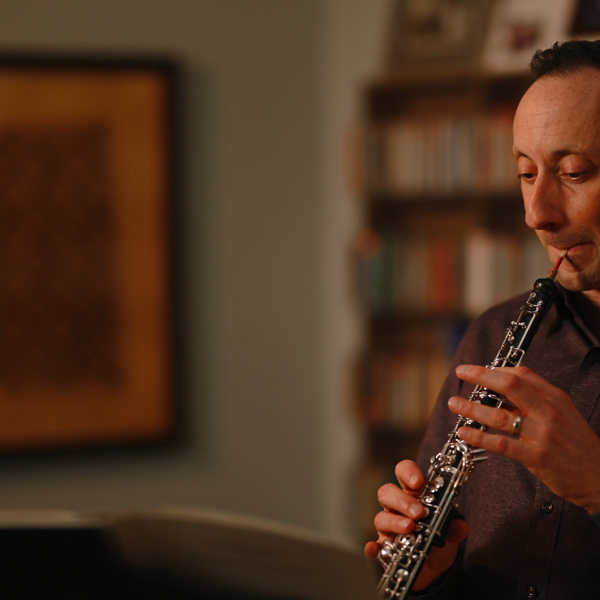
TCO: How did this concerto commission come about? Did the composer approach you, or vice versa?
FRANK ROSENWEIN: I’m always interested in seeing where we can go with oboe concertos. Too often, new concertos are “one and done,” so I was really looking for something that would have legs and live on. My idea was to approach a composer who I thought of as the inheritor of the lyricism of Copland or Barber, and Adolphus Hailstork came to mind as someone who fits into that lineage.
I met with Hailstork over Zoom and we had a wonderful conversation. I suggested that he think about the work in terms of the concertos of Vaughan Williams and Richard Strauss, which are both very chamber-like and beloved by oboists. He then went back into his “laboratory” and came up with this work, which I think fits perfectly. It’s scored for oboe and strings, so it’s very intimate, but there’s a lot of interplay between the soloist and orchestra.
Hailstork is a composer who I think exemplifies the idea of putting new wine into old bottles. For example, he uses Baroque rhythms throughout, which harken back to an older, more nostalgic time. So, I really think oboists are going to want to play this concerto and audiences are going to want to hear it.
Was there a lot of back and forth between you and Hailstork during the composition process?
There wasn’t much interaction while he was composing. I just set the table and he prepared the meal. After he sent me the score, I got together with a pianist and played through it. I had a lot of questions for him after that, so I kept emailing him and asking, “When you wrote this, what did you mean?” He very kindly wrote me back every time. But after a while, he wrote an email that said, “I’m very flattered that you want my opinion, but you’re a great player and I trust you to do what you think is right for this music.” This was very freeing and made me realize that I had more agency here than I initially thought.
How difficult would you say this piece is compared with the existing oboe repertoire?
The concerto is not without its difficulties, but it’s very well written and sits nicely in the instrument’s range. Hailstork isn’t doing anything that’s off the beaten path; there’s a lot of traditional aspects to his writing, so we’re not talking about multiphonics or flutter tonging or extended techniques. Hopefully this will also ensure that more oboists can learn and play it in the future — it’s not too high a mountain to climb.
What should people listen for musically?
The first movement is dominated by what we call the siciliano rhythm — which is a dotted eighth note followed by a 16th note followed by an eighth note — and usually set in either a 6/8 or a 12/8 time signature. We hear this rhythm a lot in older music, particularly of the Baroque era, but Stravinsky also used it in Pulcinella. There’s a calming, kind of rolling quality to that rhythm that feels nostalgic.
Hailstork described the second movement as a lullaby, perhaps sung by a mother to her child. The strings play an ostinato rhythm throughout, while the oboe floats on top. The third movement might sound vaguely “Middle Eastern” because there are a lot of augmented seconds and flourishes that could evoke music from that part of the world.
Overall, I think Hailstork took the notion and sound of the oboe and created a kind of imagined fairy tale. The concerto is called Distant Lands, so it captures the beauty and nostalgia of faraway places that the oboe might represent.
How many reeds will you make for the concerto?
The Hailstork concerto reed will be interesting because it needs to be able to do everything even more so than in a normal orchestra performance. That is to say, the control factor has to be extremely high, as does the efficiency. Generally, I like to play broken-in reeds for concertos, whereas in the orchestra, I prefer newer reeds. Any reed that I’m making now is going to be pretty much dead and gone before the concerto, but if I make something a couple weeks before, that one might be the ticket.
At the Reed Desk with Frank Rosenwein


Is preparing a brand-new piece different from a standard concerto?
The main thing about playing a piece you don’t know is trying to figure out how it will feel when you get on stage with the orchestra. You generally don’t get that much time to rehearse, so you have to ensure you’re as prepared as possible. I have a piano score, but I have to imagine, “What if this were strings instead of a piano? What would that sound like?” And I’m also trying to reconcile the fact that there’s going to be a conductor beating time and cueing tempo and dynamic changes. So, it’s all about imagining yourself in performance.
Will you practice at home in your performance clothes?
I will not be wearing my tuxedo at home with my concert shoes! That part I can imagine, but I will definitely be practicing in the hall at the front of the stage since that is one of the things that’s unusual about a concerto. I’m very comfortable being in the middle of the orchestra and this upends my usual location, so getting used to the idea of being the sole focus is something that I want to practice. I’ll also probably play it through for my students, which I usually like to do. Overall, it’s really exciting; I feel like the captain on a maiden voyage!
— Frank Rosenwein is Principal Oboe and holds the Edith S. Taplin Chair.