A Conversation with Michael Sachs
We asked Michael Sachs, The Cleveland Orchestra’s Principal Trumpet, about the history of Haydn’s Trumpet Concerto and how he prepares for such a well-known work.
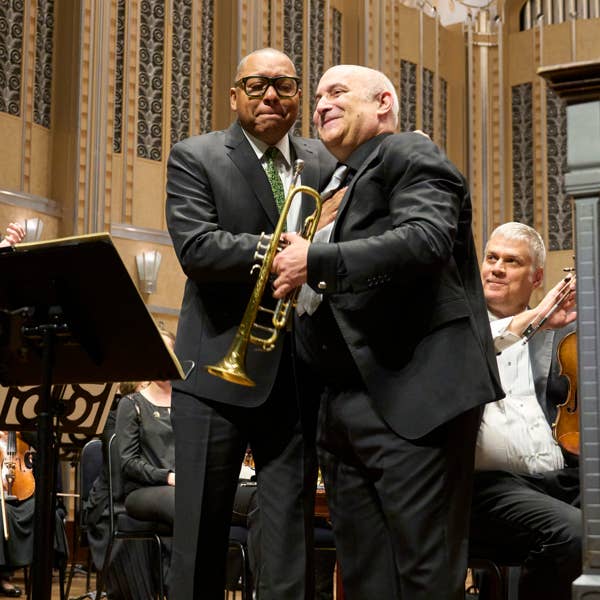
Throughout his 35+ year career with The Cleveland Orchestra, Principal Trumpet Michael Sachs has stepped into the spotlight on several occasions to premiere new works for trumpet and orchestra by leading contemporary composers such as Wynton Marsalis, Matthias Pintscher, Michael Hersh, and John Williams. For the Orchestra’s March concerts with Elim Chan, Sachs instead revisits an old favorite — Haydn’s Trumpet Concerto, arguably the most famous concerto in the instrument’s repertoire. We caught up with Sachs to learn more about this piece and his relationship with it.
What’s the history of Haydn’s Trumpet Concerto?
This piece was a genesis moment for the modern trumpet. Haydn wrote the work in 1796 for Anton Weidinger. Not only was Weidinger a virtuoso trumpeter, but he was the inventor of the keyed trumpet, which, for the first time, allowed the instrument to play a chromatic scale, much like a piano. Before, the trumpet could only produce a select few notes in the harmonic series. But with Weidinger’s keyed trumpet, Haydn now had the ability to write things for the instrument that were not possible up to that moment.
Take the opening of the solo part, for instance. The first three notes would have been the first time that anybody would have heard the trumpet play those notes in that sequence! Besides the historical significance of this piece, it’s also one of the first major concertos that most trumpet students learn.
Was that the case for you?
I started learning the second movement when I was about 14. Then, during my senior year of high school, I performed the first movement with my school wind ensemble, which was my first real foray into the piece.
Will this be your first time playing this concerto with The Cleveland Orchestra?
It’ll actually be my third time. I first performed it at Severance in 1993, which marked my concerto debut with the Orchestra on a subscription concert. I then played it again at Severance in 2006. That performance was particularly special because it was the first time my daughter, then 3 years old, heard me play with the Orchestra.
To prepare her for the concert, I played parts of the concerto so she would know what to recognize, and my wife gave her an overview of how to behave in the concert hall. The funny thing is that on the night of the performance, she was sitting on my wife’s lap and started looking really puzzled after the piece began. She turned to my wife and said, “What’s daddy doing?!” because I wasn’t playing during the orchestral introduction; I was just standing there. Then, once I finally started playing, she went, “Ooohhh,” and was dead silent the rest of the way, totally mesmerized.
This is my first time playing the concerto with the Orchestra since that performance, and it’s very special to me that my daughter can come back and hear it again 20 years later. Having a piece that I performed just a few years into being with the Orchestra, a second time in the middle, and now again closer to the end of my career — it’s become a signpost for me.
What is your preparation process like, especially for a piece you know so well?
Even though I’ve been living with this piece for basically 50 years, there are always new things to discover. Any time I dust off a piece, I take it down to the studs and rebuild it from scratch, just to make sure that I’m not going on automatic pilot.
First, I have my general conditioning, which is a healthy dose of daily fundamentals on the B-flat trumpet. I play E-flat trumpet in this concerto, so I start introducing the E-flat trumpet into some of that fundamental work until it starts feeling as natural as my primary instrument. Then, as I begin a deep dive into the piece, I’m either reinforcing what I’ve done in past performances or evolving it into something even better. Over time, you learn more and find deeper meanings.
Several years ago, I actually got to see Haydn’s original manuscript in Vienna, thanks to Otto Biba, who was then the archive director at the Musikverein. It was fascinating to see the adjustments Haydn made based on Weidinger’s performance and input, and to copy those things into my own music.
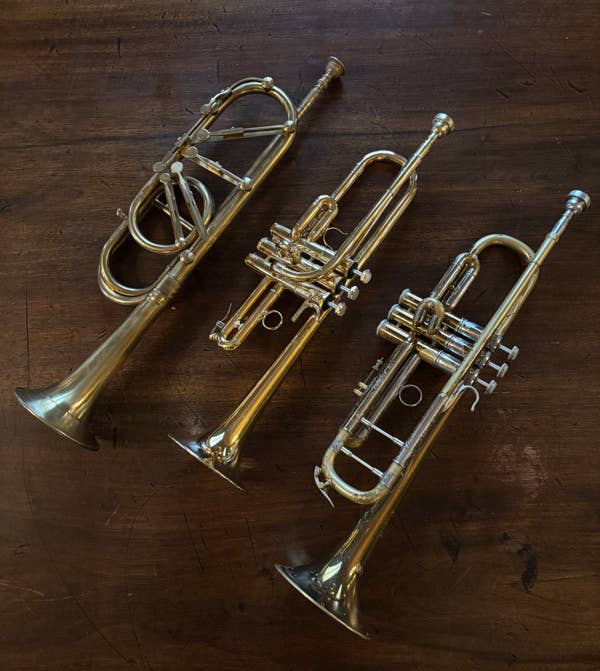
I’ve also practiced a bit on a keyed trumpet (above) to get a sense of how Weidinger would have originally performed the piece. I’m using that sonic presence to inform what I do stylistically on the modern instrument.
How might audiences hear these historical considerations in your performance?
In Haydn’s time, composers often left an open space for the soloist to create their own cadenza. It is that one moment when the musician’s personal voice joins the composer’s stylistic framework. I wrote this particular cadenza in 1987, which reflects something that I would be able to play on a keyed trumpet, instead of something that I would only be able to do on a modern instrument.
I’ve since tweaked my cadenza a bit, but the bones of it came from cobbling together things from my favorite recordings with a few of my own ideas. And that’s something very akin to what performers would have done in Haydn’s day.
You’ve played a lot of concertos with the Orchestra over the years. What does it mean to you to get to perform like this with your colleagues?
Whenever I stand in front of this orchestra, I feel enormously grateful and inspired, because I’m usually in the back of the ensemble with everyone in front of me. It’s like the feeling a professional surfer would get riding some giant wave, feeling this energy coming from the group and the incredible artistry happening around me. It’s just magnificent — incredibly inspiring and humbling.
Michael Sachs is Principal Trumpet and Principal Cornet of The Cleveland Orchestra. He holds the Robert and Eunice Podis Weiskopf Chair (Trumpet) and Mary Elizabeth and G. Robert Klein Chair (Cornet).