Between Score and Podium: Composer-Conductors Come to Cleveland
Composing and conducting emphasize opposite strengths. Yet both can converge in the same artist. In the 2024–25 season, The Cleveland Orchestra showcases three stellar exemplars of the phenomenon.
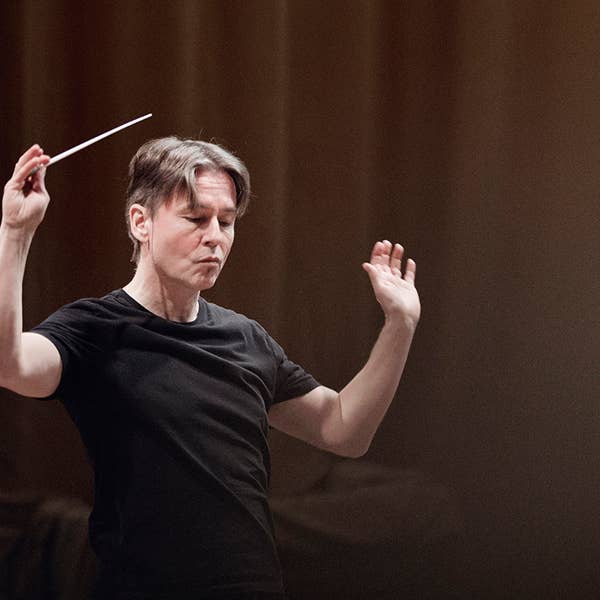
The arts of composing and conducting emphasize opposite ends of the personality spectrum: the former tends to be an intensely private activity associated with the solitude of the studio, while the latter relies on the extrovert’s affinity for communicating with the public. Yet both can converge in the same artist.
This season, The Cleveland Orchestra is showcasing three stellar exemplars of the phenomenon. Esa-Pekka Salonen ascends the podium on October 10, 12, and 13, while Tan Dun makes his Cleveland conducting debut a few weeks later, on October 31 and November 2. And on February 20 and 22, 2025, Thomas Adès returns to lead the Orchestra in a major new commission. All three artists are leading figures in the international classical music scene. Naturally, each brings unique “insider” knowledge when it comes to conducting their own music. But their insights into the creative process will likewise illuminate the works by other composers that they have selected for their respective programs.
Far from a novelty, the combination of composer-conductor roles was commonplace before the increasing complexity of professional musical life began to favor specialization. The Cleveland Orchestra’s own past includes numerous composer-conductors who made the trip to Cleveland to work with its fabled musicians. Maurice Ravel stopped by on his first American tour in 1928 — though Nikolai Sokoloff, the Orchestra’s first Music Director, complained that his conducting was “both messy and ghastly” — while Igor Stravinsky began his association with the Orchestra in 1925. After leading a program of his works in 1955, he declared: “I am really a happy man batoning this fine group.”
Esa-Pekka Salonen initially envisioned a life devoted wholeheartedly to composition. But in 1983, at age 25, he impressed the music world when he filled in at the last minute for Michael Tilson Thomas to conduct the Philharmonia Orchestra in Mahler’s Third Symphony. To his own surprise, he thereby launched one of the preeminent conducting careers of our era.
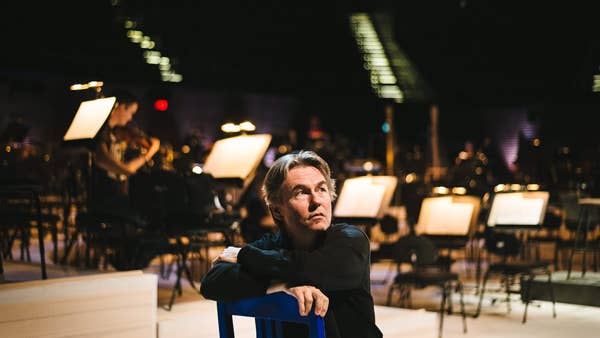
After a decade or so spent immersing himself in the music of others as a conductor, Salonen recalled, he came to understand that “there is more than one truth,” compositionally speaking: it was not monopolized by the avant-garde European language in which he had been trained. That epiphany led to a creative breakthrough and a new focus on his work as a composer.
Salonen, now 66, has channeled some of his most innovative ideas as a composer through the age-old concerto format. Along with Ravel’s Le Tombeau de Couperin and Sibelius’s Fifth Symphony, Salonen’s Cleveland program will feature his expansive Cello Concerto, which was premiered in 2017. Originally written for Yo-Yo Ma, it will introduce Cleveland audiences to the remarkable young Finnish cellist Senja Rummukainen.
Yo-Yo Ma, as it happens, was featured on the soundtrack of Crouching Tiger, Hidden Dragon, the Ang Lee film from 2000, for which Tan Dun’s music won both an Oscar and a Grammy Award. Born in a village in Hunan Province in 1957 and an émigré to New York, Tan Dun has become known for his imaginative fusions of Chinese and Western musical traditions.
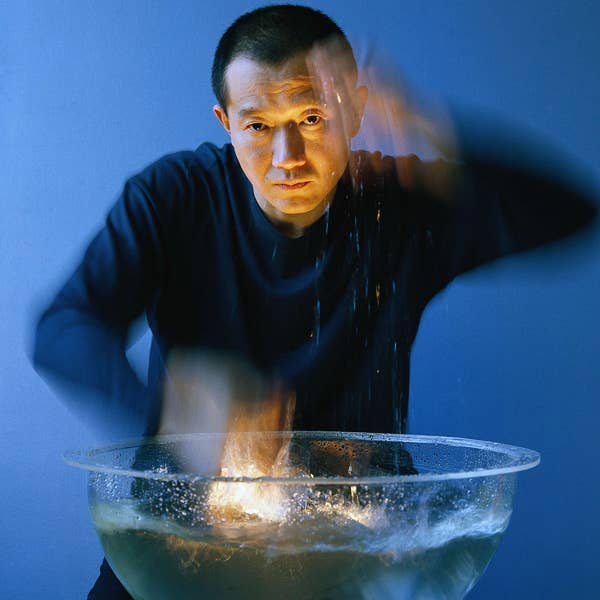
A gripping theatricality and sense of ritual imbue many of Tan Dun’s works, which frequently incorporate musical ideas inspired by natural elements. He will conduct two of his own compositions that manifest these traits. With his 1998 Water Concerto, which calls for the soloist — in this performance, Cleveland’s Principal Percussionist Marc Damoulakis — to manipulate basins filled with water, Tan Dun writes that he hopes to encourage the audience to “listen and rediscover life’s elements, things that are around us but we don’t notice.” His 2012 Concerto for Orchestra draws on his earlier opera, Marco Polo, about the legendary Italian traveler of the Silk Road.
The unique sound world that Tan Dun has developed gives him an unparalleled perspective on Britten’s Four Sea Interludes, which similarly originate from an opera, his landmark Peter Grimes. An early Stravinsky piece, Fireworks, will pay homage to still more elements as the concert’s dazzling opener.
Thomas Adès, born in London in 1971, made his conducting debut with The Cleveland Orchestra in spring 2023. For his return engagement, Adès has revised his millennial work America: A Prophecy. An apocalyptic meditation setting Mayan poetry and other texts, this newly expanded version of the piece was co-commissioned by the Orchestra and features The Cleveland Orchestra Chorus alongside mezzo-soprano Sasha Cooke. Adès will juxtapose his music with the infrequently played Orchestral Set No. 2 by Charles Ives and a pair of sea-related works by Sibelius and the late Kaija Saariaho.
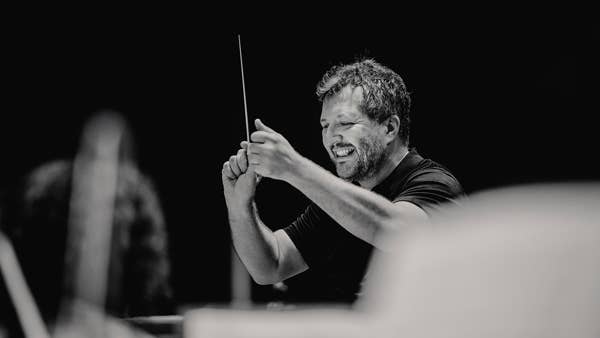
When asked about performing the music of others, Adès responded, “The score is just a map of intentions. … The music came before the score. And the music is the thing behind the surface.” With this season’s stellar lineup of composer-conductors, we can fully expect each to illuminate the music beneath the score in the intriguing programs they have constructed.
— Thomas May
Thomas May is a writer, critic, educator, and translator. A regular contributor to The New York Times, The Seattle Times, Gramophone, and Strings magazine, he is the English-language editor for the Lucerne Festival.