Copland as Conductor in Cleveland
Musicians and audiences, especially within the United States, know of Aaron Copland and consider his music the defining orchestral sound of America. However, his compositions took some time to gain the well-deserved recognition they enjoy today.
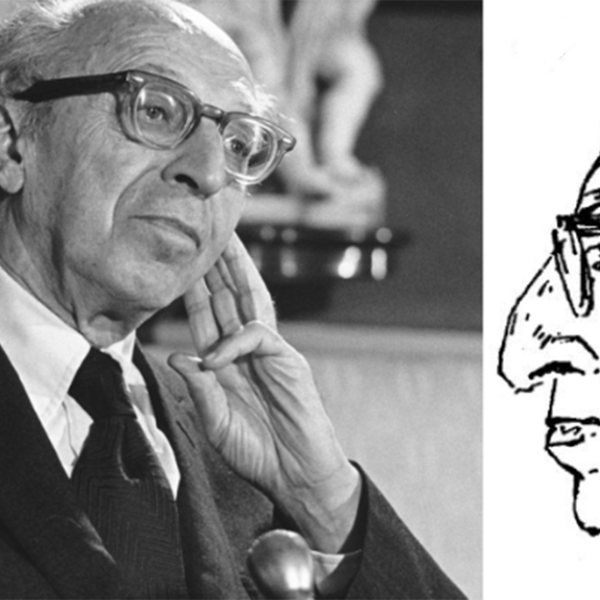
Though Aaron Copland (1900–90) began composing at a young age, it was not until his travels abroad and forays into film and ballet that most major orchestras began to take note. The Cleveland Orchestra’s second Music Director, Artur Rodziński, brought Copland’s music to Severance for the first time in February 1943 (the Suite from Billy the Kid), and Copland’s compositions — especially his ballet works — quickly became staples of education and pops concerts. In a 1965 interview with Cleveland music critic Robert Finn, Copland commented, “I remember well being thought a radical. But still I don’t want now to be considered the old fogey.” Determined to continue improving his musicianship throughout his life, Copland began conducting orchestras later in his career after already establishing his prowess as composer and teacher. Copland did not come to Severance as a conductor until his 65th birthday, over 20 years after his music first premiered at the hall.
By the time Copland made his conducting debut with The Cleveland Orchestra on November 26 and 27, 1965, critics and audiences widely acknowledged his esteemed reputation as a composer, essayist, and teacher. Local press and broader writings considered Copland “the dean of American composers,” and music critic Ethel Boros deemed him the “foremost living American composer.” The Cleveland Orchestra Women’s Committee (now Friends of The Cleveland Orchestra) even held a luncheon in honor of Copland’s arrival and recent birthday. His time in Cleveland garnered significant publicity, and his debut concert at Severance was announced as standing-room-only days before the actual event.
Listen: Chávez: Sinfonia India; Aaron Copland, conductor (Nov. 26, 1965)
Copland methodically selected the music for these performances to tell a story about his education and personality. He began his Severance conducting debut with Ferruccio Busoni’s Rondò arlecchinesco, partly as a salute to Busoni’s upcoming centennial in 1966 and partly because Copland fondly remembered seeing Busoni perform. Next, Copland conducted Gabriel Fauré’s orchestral suite from Pelléas et Mélisande (Copland’s teacher, Nadia Boulanger, was Fauré’s pupil), followed by the Sinfonia India of Carlos Chávez (Copland’s dear friend). The main event of the evening was Copland’s own Symphony No. 3, which had not been heard at Severance for nearly two decades, excerpted below.
Listen: Copland: Symphony No. 3, Mvt. 4; Aaron Copland, conductor (Nov. 26, 1965)
The concerts received glowing reviews and standing ovations on both evenings. Bain Murray observed, “The optimism and exuberance of Aaron Copland’s music and his conducting [gave] concertgoers the feeling of exhilaration.” Murray also noted his “detailed baton technique” and the tangible respect from Cleveland musicians as they “played with zest under Copland’s animated direction.” Arthur Loesser similarly — and somewhat sassily — noted, “Unlike some other eminent composers, he has a genuine aptitude and skill in conducting.”
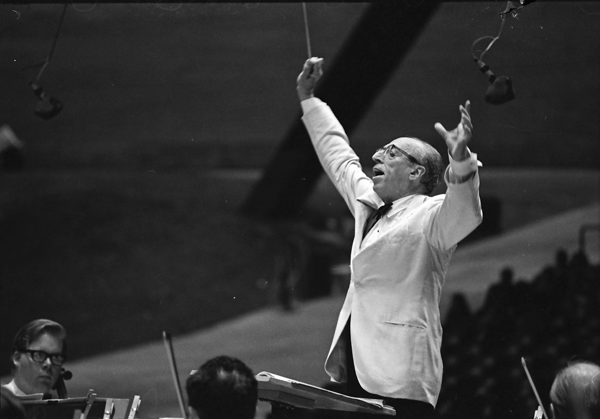
Copland returned to work with The Cleveland Orchestra for five more concerts in later years. These included three different programs at Blossom Music Center on August 17, 1968, and August 1 and 9, 1970. The infectiously joyful “Hoe-Down” from Copland’s Rodeo, recorded August 1, 1970, is excerpted below. On November 7 and 9, 1974, Copland conducted again at Severance. His 1974 return marked a celebratory occasion: Aaron Copland Week. During the concert, Copland was gifted the Key to the City to honor his contributions to the cultural landscape of Cleveland and the United States more broadly.
LISTEN: Copland: Hoe-Down from Rodeo; Aaron Copland, conductor (Aug. 1, 1970)
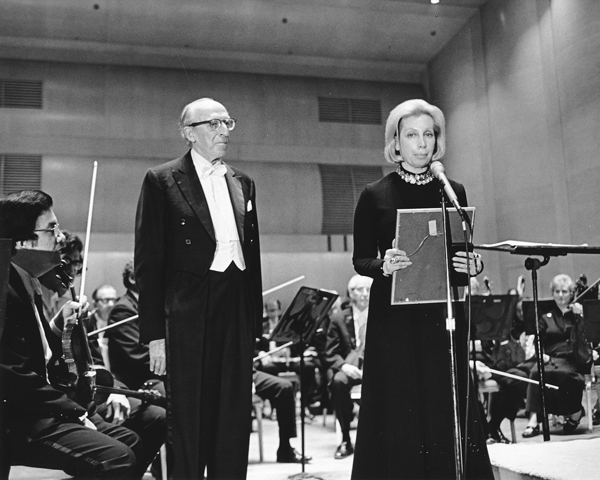
Copland’s music and teachings now enjoy widespread popularity and admiration, whether in the United States or abroad. As Ethel Boros commented, “His work has much feeling, much sensuous beauty and is very easy to know and to understand.” However, Copland was not only a talented composer but a highly skilled, sensitive conductor, apparent through the beautiful recordings from The Cleveland Orchestra archives and the words of his contemporaries and the press.
— Krista Mitchell was the 2022–23 season archives research fellow. The fellowship is an opportunity for graduate music students from Case Western Reserve University to work with The Cleveland Orchestra Archives.