Stravinsky and the Fashion Revolution of 1916
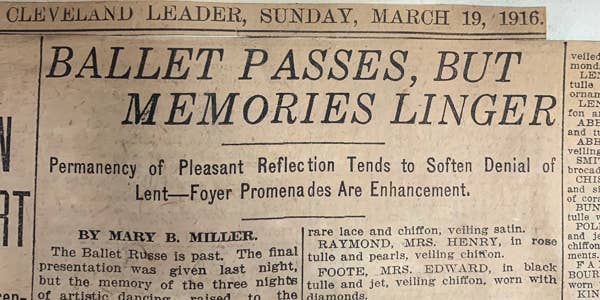
In The Cleveland Orchestra Archives, a single scrapbook usually contains press clippings related to the better part of a season. But the press surrounding the promised arrival of the Ballet Russe occupies a book of its own.
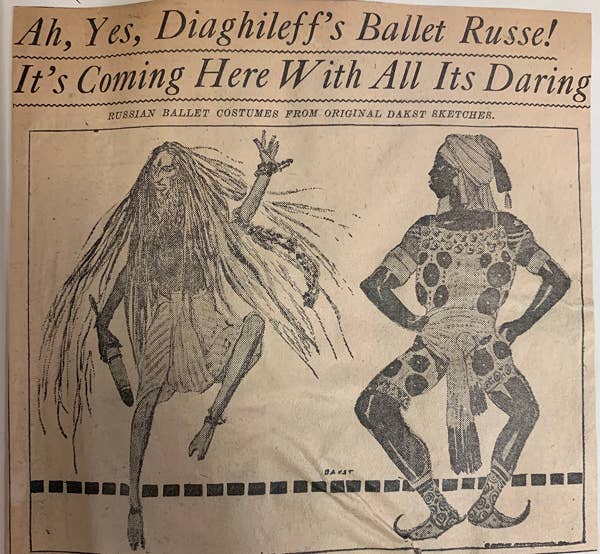
When, in late 1915, the newly founded Musical Arts Association announced its intentions to participate as a host city for the Ballets Russe’s first ever American tour, mouths watered. In The Cleveland Orchestra Archives, a single scrapbook usually contains press clippings related to the better part of a season. But the press surrounding the promised arrival of the Ballets Russe occupies a book of its own. Yet one cannot overcome a sense that the ballet itself took second place to the glimpse into unchartered culture promised by Igor Stravinsky’s and Leon Bakst’s production. Sketches of contorted dancers in decidedly foreign attire circulated as speculation about what was sure to be a spectacle.
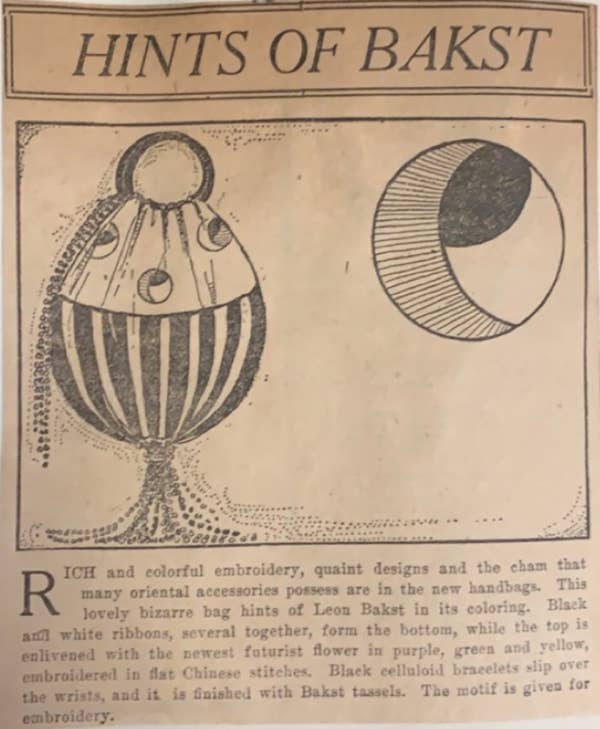
Clevelanders warmly embraced fresh inspiration, infusing their closets and kitchens with all things Russian. “Spring Styles from Farther than Paris—From Russia!” read the headline of a 1916 article in the Cleveland Press promulgating the Russianness of all things “in.”
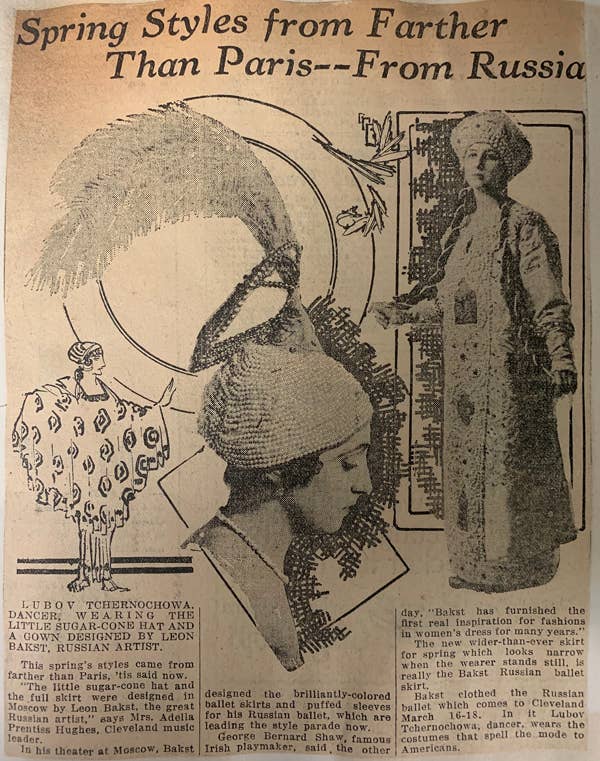
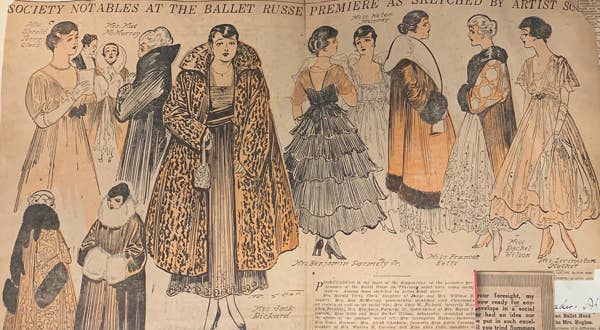
Local clothiers obliged, replacing the lampshade tunics and hobble skirts of Parisian couture with Bakst-inspired dresses recognizable for their exaggerated A-line shape.
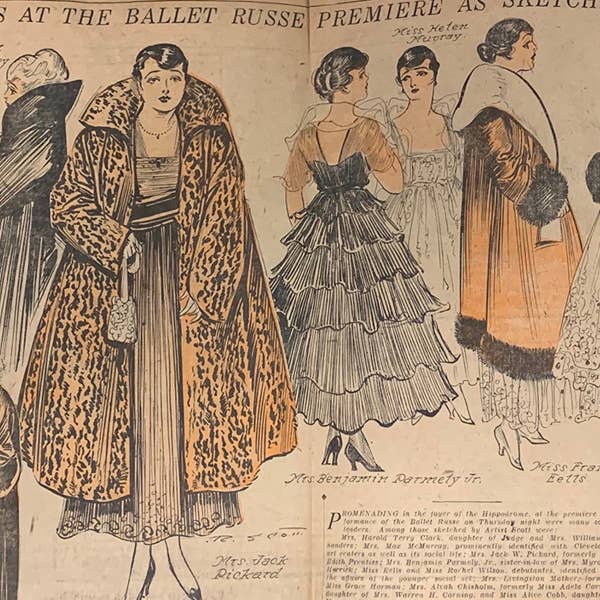
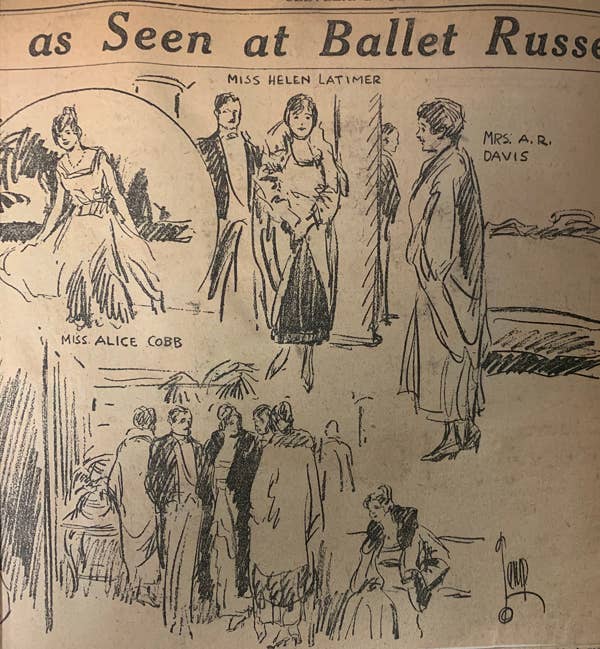
The excitement culminated in the opening performance on March 17, 1916, where concert-goers flaunted their fresh looks; sketches copied in a series of newspapers following the premiere depict women donning their latest Russian-inspired habiliments.
To be sure, the Musical Arts Association ushered in more than new music with its opening concert.
— Michael Quinn was the 2018–19 season archives research fellow. The fellowship is an opportunity for graduate music students from Case Western Reserve University to work with The Cleveland Orchestra Archives.
Want to learn more?
- Read Kate Rogers’s story about Cleveland’s rich history with ballet.