The Cleveland Orchestra Chorus Finds a Hero: Robert Shaw Makes His Mark
Over the course of the mid-1950s to the mid-60s, Robert Shaw achieved George Szell’s vision of elevating Cleveland’s amateur symphonic chorus to a world-class ensemble.
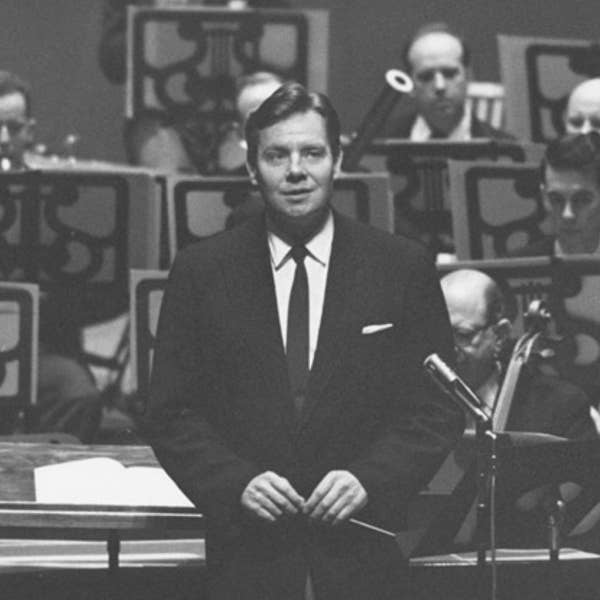
“This is a Music Factory!,” staff conductor Robert Shaw declared to an audience of young people at an education concert in 1958, in Severance Hall.
Before my experience in The Cleveland Orchestra Chorus, I had never fully realized the intimate nature of the relationship between a director and his choir. When I applied for an audition I had no idea that Mr. Shaw himself would judge each prospective member individually. I had expected that tedious task to be delegated to a subordinate. But from the moment I rather timidly marched up on the stage and was informed that the sandy-haired, blue-shirted man sitting across the card-table from me was the Robert Shaw, I began to comprehend how completely the Chorus was his creation.
—Michael Swanson, a fourth-year bass in The Cleveland Orchestra Chorus, writing in 1966
The Cleveland Orchestra’s most formative choral director suffers, to a degree, from overexposure in the national and international memory, on account of his eminence in the choral community, especially during his later years. Yet relatively few Cleveland natives nowadays would likely recall the fact of Robert Shaw’s tenure with the orchestra around midcentury. When, in fact, it marked a crucial phase in the careers of both Shaw and Cleveland’s Musical Arts Association (parent organization for The Cleveland Orchestra).
When George Szell hired Robert Shaw as a staff conductor in 1956 (officially for the orchestra, but ostensibly as chorus master), Cleveland’s maestro was merely the latest in a succession of musical impresarios who had sensed Shaw’s peculiar ability to hone a group of singers into a choral battery of overwhelming artistic impact. Shaw would work with both professional and amateur choristers over the course of his long career. Yet he was at special pains to communicate to his amateur singers, like those comprising The Cleveland Orchestra Chorus, his belief in their own special artistic worth, which he regarded as perhaps spiritually greater even than that of the average professional musician, because of their lack of mercenary motivation: The members of the Orchestra’s chorus are not now (and never have been) paid for their contributions to Cleveland’s musical life.
Over the course of a decade, from the mid-1950s to the mid-60s, Shaw achieved Szell’s vision in elevating Cleveland’s amateur symphonic chorus to an artistic level that would not shame, through collaboration, the efforts of its symphony. And the Orchestra was, by that time, firmly established as a world-class ensemble that, during its first major European tour, bowled over audiences and critics in the Old countries, many of whom freely conceded that Szell’s ensemble equaled—and could even eclipse—their more venerable symphonic institutions.
Born in 1916, Shaw had already begun his precipitate professional rise by the late 1930s—his early career therefore slightly predates the second World War (though its first decade was inevitably shaped by the conflict). That Shaw would eventually graduate to the greenest of musical pastures, by joining forces with Szell in Cleveland, is hardly surprising: His whole career trajectory was a remarkable, willful ascent from the amateur collegiate ensemble to the directorship of one of the major American orchestras (at Atlanta).
Renowned as a choral conductor well before his arrival in Cleveland, Shaw naturally maintained additional professional activities and commitments. He would continue to record quite consistently with his own professional ensemble, The Robert Shaw Chorale, during his Cleveland tenure. The popular (and popularizing) instinct evidenced by various of Shaw’s projects with his personal chorus (for example, an album of sea shanties with the Chorale’s male voices), shows that he’d never lost his sense of readily accessible music-making, inculcated in the college glee club settings where he’d got his inauspicious start (a native Californian, he took his undergraduate degree from Pomona College). His innately graceful, popular musical touch was nurtured under the auspices of Fred Waring’s popular radio empire, where Shaw got his first big break, right out of college.
Though the Orchestra’s archives contain quite a few non-commercial, live recordings of Shaw’s performances at Cleveland, his commercially recorded legacy with the Clevelanders is slight. His personal recording contract with RCA, predating his arrival in Cleveland, presented a conflict with the Orchestra’s at Columbia Records, for example (ironically, both labels would be subsumed, years later, under the Sony umbrella). We’re therefore obliged to do a bit of light digging (along with some imaginative extrapolation) when attempting to piece together a sonic portrait of Shaw’s Cleveland years from commercially available recordings. Shaw was able to record with musicians from the Orchestra and Chorus, but the contractual snags resulted in the musicians’ professional affiliation being somewhat euphemized when they were recorded by RCA under Shaw’s direction.
Nor is Shaw’s principal commercial recording with the Clevelanders especially representative of the scope of his conducting activities with the Chorus. Rather, it is more a public-facing demo for the Orchestra’s revitalized vocal contingent: Hallelujah! and other great Sacred Choruses (1962) presents essentially a greatest hits of the big symphonic Mass and oratorio repertoire. Certainly, the album’s concept is lighter than what Szell himself would likely have produced, its popular choral extracts substituting for the larger multi-movement works that Shaw, also, took pride in preparing for collaboration with the Orchestra. But the album does provide a sense of the particular choral sound that Shaw had cultivated around a half-decade into his tenure in Cleveland. (Some of the recorded selections give us a tantalizing taste of what a more ambitious recording contract for Shaw and the Chorus (in collaboration with the Orchestra) might have produced.
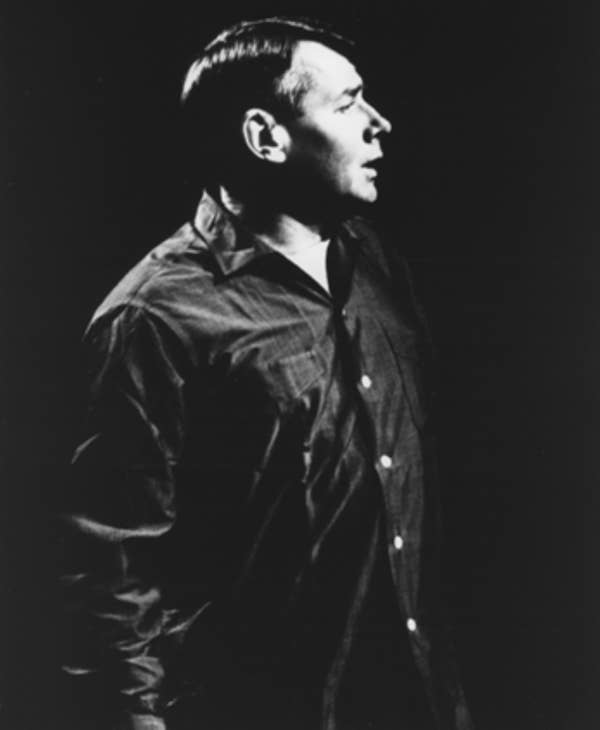
Strangely enough, one of the more compelling (and clarifying) aspects of Shaw’s legacy is not, strictly speaking, musical: He was an exceptionally enthusiastic writer, remembered for his casual-sounding, yet carefully wrought letters-to-the-choir—missives that, in addition to providing more businesslike reminders of rehearsal scheduling, etc., included substantive (but not difficult) discourses on the various musical problems with which his, or any ensemble, was confronted. Copies of many of these letters can be found in the Orchestra archives. Their distinctive eloquence, along with the revealing portrait they paint of Shaw as an ensemble leader and musical personality, has led to some of their being published in the indispensable The Robert Shaw Reader, edited by Robert Blocker.
These letters show that high among Shaw’s gifts was an ability to render the sublime and the spiritual—even the religious—in practical terms (it has been suggested that this is an inheritance from his upbringing as a minister’s son, who intended, as late as university, to take up his father’s vocation). The communal aspect of choral singing is, for Shaw, such an overwhelming, quasi-religious imperative that he asserts, in one letter, that he is willing to undertake repertoire that might, in theory, sound best with a smaller choir, without whittling down the membership of his symphonic chorus in order to do so. Regarding preparations for performances of the Bach B-minor Mass, he wrote to his choristers:
Bach is above all a composer whose understanding and enjoyment are found in participation; his choral writing is undeniably an act of common worship. Were we to cut the ranks of the Cleveland Orchestra Chorus, to allow but one of every five members to participate, it well might be that we would have dusted off the letter of Bach’s law, but killed his spirit.
[November 5, 1957]
(Shaw may eventually have thought better of this approach, as evidenced by later letter, concerning the Bach Magnificat, dated November 30, 1960, that rationalizes a reduction in performing forces.) In the end, Shaw is too demanding a craftsman to allow the spiritual to devolve into the sentimental. Yet, when writing these letters, he undoubtedly traffics in ideas and imagery that might easily curdle into sentimentality in the work of a less purposeful artist.
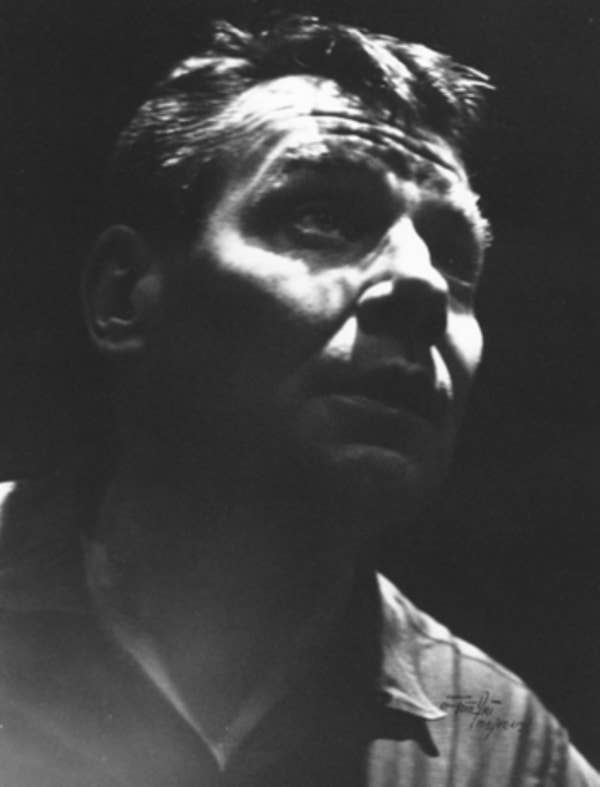
Shaw’s quirky humor — a sure antidote to any over-indulgence in the mystic side of music-making—is so deliciously zany as to be almost unsummarizable, demanding quotation: “The business of a conductor is to holler “Sheep[?]” and to holler it so loud so clear so long and so successfully that even the wolves begin to doubt their existence, shuffle off their mortal coils to buffalimbo — has-beens, were wolves” (February 5, 1958). Everywhere in the letters, we find weird, unforgettable exhortations: e.g. “We just have to get our haunches in harness” (February 26, 1958); or “The chorus that bays together stays together” (November 30, 1960). The letters reinforce a popular image of the choral-conductor as patriarch: We come away picturing him as almost a sort of choral society’s Father Christmas, overflowing font of gruff good humor.
The quasi-religious aura was hardly lost on contemporary observers: One of the chorus’s members, Michael Swanson, writes that “Mr. Shaw’s position vis-à-vis The Cleveland Orchestra Chorus is that of prophet-priest. The choir is his congregation—the score his text. He transmits to his choir the message of Bach or Beethoven as interpreted from the vantage point of his own vision” (Michael Swanson, in “A Tribute to The Cleveland Orchestra Chorus,” an Entr’acte program essay for performances on November 3, 5, and 6, 1966). Though his biographers tend to stress his vivacious impieties, Shaw’s virtue cannot be doubted as regards the then-fraught arena of domestic race relations: His notably successful Collegiate Choir (unaffiliated with any academic institution), founded in New York in the 1940s, was integrated from its conception at its conductor’s insistence. Of his chorus at Cleveland, his secretary Edna–Lea Burruss wrote: “Who are the people who make up the Cleveland Orchestra Chorus? They’re teachers, students, doctors (M.D., Ph.D.), secretaries, architects, plumbers, housewives, engineers — all races, all religions — each fissured and fractioned by all matters of daily living” (in another Entr’acte program essay, from 1963).
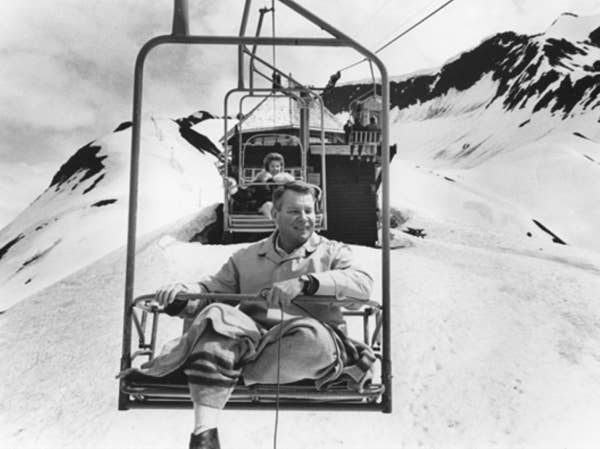
A faintly paternal tone underlying the conductor’s letters is a part of their flavor—his affection is palpable and doubtless central to his choristers’ conception of him. Shaw-as-musical-paterfamilias was a product of his time: It seems doubtful that, today, a major music director would tip-toe quite so readily up the edge of patronization when addressing his musicians. Shaw’s sincerity and exactitude (to say nothing of his humor) ensure that he doesn’t quite cross that line. Still, these documents date from the midcentury, when an air of noblesse oblige was part and parcel of the senior music director’s public and (self-) conception. In his cultural history of the Orchestra, Donald Rosenberg illuminates the extremes to which a man of Szell’s generation and patrimony was apt to cinch the yoke upon the shoulders of the musicians who worked under him. That ensemble members should often bridle under the stress of the imposition, especially in a country whose ethos is rugged individualism, was all but inevitable.
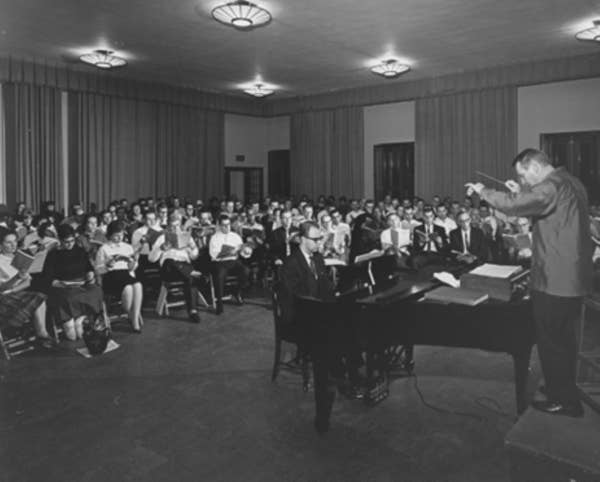
Conductor and pedagogue Michael Charry, who worked alongside Shaw as a staff conductor in the late-1950s and 60s, observes that Shaw’s ego, too, was certainly ample—but that any potential for grandiosity was effectively short-circuited by the choral conductor’s acute awareness of his own deficits in early, foundational musical training. Shaw may have been prodigiously clever; he was no prodigy. His self-education in professional musicianship was hard-won. Charry recollects overhearing Shaw toiling away one day over (crucial) score study in the offices of Severance Hall. Without the pianistic background that Szell, Charry, and almost all conductors take for granted, Shaw’s score preparation in private could be slow-going indeed, with chords pecked out at the keyboard by dint of a very considerable effort.
Yet Szell, who could be crushing almost to the point of cruelty when his musicians betrayed their fallibility in executing musical tasks that the maestro’s genius (hardly too strong a word, in Szell’s case) could fairly have dispatched while sleepwalking, was definitely respectful, Charry believes, of the very real, personal pains that Shaw took in overcoming his lack of youthful preparation for an international-level career in music. Once having prepared his scores, Shaw worked at the highest artistic and professional level as a choral director. Charry recalled serving as accompanist for some of the Chorus’s rehearsals, where he was witness to Shaw’s almost terrifying command of the clock, with every precious scrap of rehearsal time predetermined in its function, necessitating exceptionally brisk transitions on the part of the accompanying pianist (and chorus).
As with all perfectionists, it was the results, apparently, that mattered. At every stage in Shaw’s career, it seems, senior conductors far more worldly and accomplished than he could pick out his almost uncanny instinct for choral transformation. Shaw was a workhorse who, through artistic intelligence and force of will, made his choral work indispensable to cultural figures as lofty and seemingly unapproachable as Toscanini and Szell. It is probably suggestive of Shaw’s drive and ambition that he was not content to merely prep the chorus before the big show.
Though Szell’s principal motivation in wooing Shaw to Cleveland was unquestionably a strategic bid for superior choral forces, which could soar aloft with his orchestra rather then weighing it down in repertory works as essential and inescapable as Beethoven’s 9th symphony, it mustn’t be shortchanged that Shaw was, in fact, hired as a staff conductor for the Orchestra. Beyond leading regular choral rehearsals, he conducted the Orchestra in myriad concerts, many of them educational events for local children. Programming for his performances shows far more renditions of purely orchestral works than of works with choir. (And, as is always the case with a symphonic chorus, much of Shaw’s work was expended in preparing the chorus to be absorbed into a larger musical context for major concert works that would be conducted in concert by Szell himself.)
There were, however, significant performing opportunities for members of the Chorus under Shaw’s immediate direction. Especially suggestive is a commercial recording of a pair of Bach cantatas (Nos. 56 & 82) that deploys a stripped-down contingent from Cleveland Orchestra and Chorus (euphemized as the RCA Victor Orchestra and Chorus). Here the chorus’s role is quite minimal: the recording is mainly a vehicle for the renowned bass-baritone Mack Harrell (father of the still-more-famous cellist, Lynn Harrell, who would later hold an important, early-career post as Principal Cello with the Orchestra). This unassuming Bach album is in total contrast to the splashier, demo-type recording of “Great Choruses,” in that it records complete versions of definitionally serious works—repertoire that we know, per his letters, Shaw would have regarded with particular respect, and even awe. The recording is, thankfully, easily accessible on streaming platforms, including Spotify.
But the Archives are also home to non-commercial live concert recordings by Shaw and the Clevelanders, both from his official tenure in the 50s and 60s, and from a few subsequent performances as a visiting conductor (including performances from as late as the 1990s, shortly before Shaw’s death). Despite Shaw’s well-earned reputation as a choral popularizer, he did not shy away from modernist repertory—indeed, the letters make clear that these contemporary (or near-contemporary) works mattered to him deeply.
Here is a clip from the opening of Stravinsky’s Symphony of Psalms (recorded live in 1997), which Shaw performed several times over the years with the Orchestra and Chorus.
Beyond their remit with the Orchestra, the choristers, under Shaw’s direction, did important international work from 1963–64, when a significant portion of their membership acted as resident choir for the Festival Casals, performing under the baton of the great maestro himself in San Juan, Puerto Rico (the festival’s performance rosters provided a sometimes eye-popping line-up of midcentury luminaries, including Claudio Arrau, Eugene Istomin, Henryk Szerying and, last but hardly least, Pablo Casals himself).
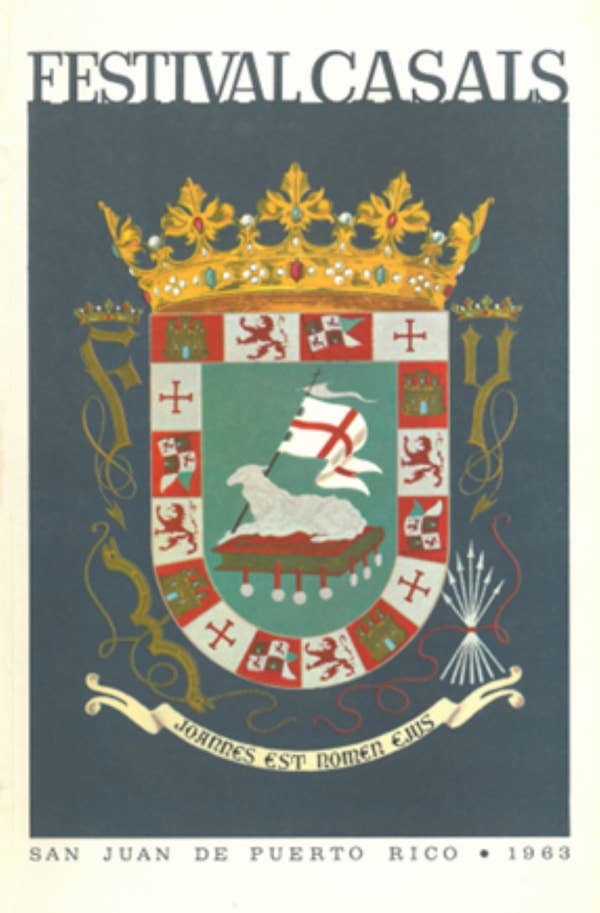
Nor was the choir’s role in these festivals a particularly light one—they would perform major repertory works with the festival’s orchestra; among them, Beethoven’s 9th symphony, Haydn’s Creation, Schubert’s G-major Mass, and the Bach St. Matthew Passion, this last sung in an English translation prepared by none other than . . . Robert Shaw! More unusual were the performances of Casals’s own oratorio, El Pessebre (The Manger), ostensibly a rumination on the Nativity, but carefully contextualized through program notes and marketing as part of Casals’s broader efforts in the pursuit of a postwar global peace. Shaw and the Chorus’s association with the Festival Casals achieved an apogee in special repeat performances, in collaboration with Casals, held stateside at Carnegie Hall!
Shaw was and remains an original—a peculiar cultural figure not easily cross-referenced with his contemporaries. His success as a choral director, even before his arrival in Cleveland was so lucrative that, Charry assumes, his personal financial assets actually exceeded Szell’s. (Charry recalls the splendiferous Bentley convertible that Shaw used for his commute to Severance Hall.) In a sense, Shaw had taken a demotion in accepting the job in Cleveland: he’d already been working as the principal conductor at the San Diego Symphony. Szell’s Cleveland ensemble operated on a far more rarefied level, however—Shaw openly admitted it was a golden opportunity for further career development. And his shrewdness paid off. After tilling the fields in Cleveland while serving in an associate role for over a decade, he finally achieved his career-capping sinecure as conductor of the Atlanta Symphony Orchestra. Shaw retained his position in Atlanta for many years, resulting in a very considerable choral-symphonic recorded legacy (on the Telarc label).
Shaw died in 1999, at the age of 82. Even today, a quarter century after his death, choristers the world over who had the opportunity to sing for him remember Shaw as perhaps the closest thing to a patron saint that 20th-century American choral music ever had. Other of his choral colleagues, like Roger Wagner, might vie with him for artistic distinction, but no one seriously approached the breadth of his influence on the national choral life. Here in Cleveland, at a crucial juncture in his professional and artistic development, Shaw found the chance to work regularly with a choral ensemble—and orchestra—that could match and further expand his outsized musical vision.
— Dane-Michael Harrison was the 2023–34 season archives research fellow. The fellowship is an opportunity for graduate music students from Case Western Reserve University to work with The Cleveland Orchestra Archives.
Photographs and recordings come from the collection of The Cleveland Orchestra Archives.
A particular debt of gratitude is due to former Cleveland staff conductor Michael Charry, who graciously shared his memories of the Shaw era in an online interview.
Want to learn more?
- Blocker, Robert, ed. The Robert Shaw Reader. New Haven: Yale University Press, 2004.
- Charry, Michael. George Szell: A Life of Music. Urbana: University of Illinois Press, 2011.
- Mussulman, Joseph A. Dear People . . . Robert Shaw: A Biography. 2nd ed. Chapel Hill, N.C.: Hinshaw Music, 1996.
- Rosenberg, Donald. The Cleveland Orchestra Story: “Second to None.” Cleveland: Gray and Company, 2000.