The Piano: A Coming-of-Age Story
Mao Fujita’s Severance recital program spans over 100 years, which encompassed major developments in classical music and in the piano itself.
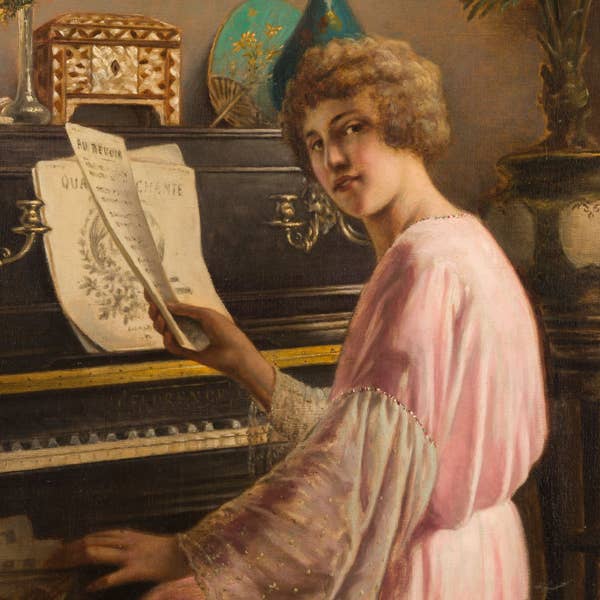
The long-19th century was an age of expansion, industrialization, and increasing global connectivity. Old systems of government were challenged and overturned throughout European spheres of influence, and innovations in electricity and printing technology created, for the first time, a sense of mass culture. The invention and astonishing rise of one machine in particular perfectly encapsulates this era of mind-boggling change: the piano.
The earliest pianos were modified harpsichords in which the strings (made from thin wires) were struck with a small hammer instead of plucked by a quill. These obscure instruments sounded more like a lute or guitar than a modern piano and never gained significant traction. By the latter half of the 18th century, a collection of devoted instrument builders in Vienna had made great progress in perfecting earlier prototypes. Mozart composed and performed on these Viennese instruments — somewhere between harpsichords and modern pianos — with leather hammers, damper and moderator pedals, and even small bells for sound effects.
Around the time Ludwig van Beethoven was composing his First Piano Sonata in 1795, piano building was undergoing another wave of radical change. Dedicated to his teacher, Haydn, this piece is not a keyboard sonata (equally suited to the piano or harpsichord) like those of earlier composers. Instead, it was expressly written for the evolving piano, with all of its lyric flexibility. The brooding first movement is marked piano, with interrupting sforzandos (sudden accents) throughout. In later movements, Beethoven’s dynamic markings span from pianissimo to fortissimo — a range unimaginable on earlier keyboards.
As pianos made it possible to play with a more powerful, sustained sound, composers like Beethoven responded with works that demanded instrument builders to take their innovations still further.
Beethoven’s development as a composer kept pace with advances in piano technology, but Romantic pianist-composers like Chopin, Robert and Clara Schumann, and Felix Mendelssohn came of age with much larger, more powerful keyboards. Mendelssohn’s Variations sérieuses, written in 1841, takes advantage of the full range of the ever-expanding length of the keyboard (from five octaves in Beethoven’s day to seven by 1820) and another technological advancement of piano building: double escapement action (a series of counterbalances allowing performers to rapidly repeat notes).
The next generation of Romantic composers, including Johannes Brahms, inherited pianos that now included cast-iron frames for higher string tension, allowing performers to play louder and more powerfully. Meanwhile, makers were experimenting with positioning the strings (now made of stronger combinations of wrapped wire) at varying angles to achieve equal volume across all registers of the instrument.
Brahms’s comfort at this new-and-improved keyboard is apparent in his First Piano Sonata. Almost the same length as Beethoven’s first attempt at the genre, Brahms’s sonata nevertheless feels worlds away. He writes much denser chords, packing as many notes and as much sound into the piano as possible. Each movement contains its own full range of characters, calling for effects and articulations far beyond the scope of Beethoven or even Mendelssohn.
A virtuoso composer-performer like Brahms, Franz Liszt took full advantage of the expressive potential of these instruments. He was foremost among a collection of international virtuosos who succeeded in part because of their appeal to female audiences. In addition to Liszt’s devilishly good looks, the growing ubiquity of pianos in drawing rooms contributed to his sensational fame. Mass production meant that pianos were more available and affordable than ever, and they quickly became essential markers of female gentility in Europe and America — for far more than just the upper classes. (This trend was also reflected in much of the period’s visual art, such as in the painting Young Woman at the Piano by the Belgian artist Agapit Stevens, seen in the header image of this story.)
Liszt’s arrangements of opera melodies and other familiar tunes were reproduced as sheet music and sold by the thousands to this market. His transcription of Richard Wagner’s Liebestod from Tristan und Isolde honors the original quite closely. At the beginning of the century, pianos were not equipped to mimic the pulsating swells and tantalizing sustains of a full string section and Wagnerian soprano; that Liszt’s pianos could so evocatively capture this sound world was enough of a feat, without any of the flashy embellishment for which he was so well known.
The women who drove the piano boom of the late-19th century also fueled the sheet music boom to which Liszt contributed, and often assembled individual songs and pieces into personalized leather-bound volumes. These treasured collections contain intimate inscriptions, meaningful newspaper clippings, pressed flowers, and even locks of hair. It is perhaps to this practice that Wagner was referring in his piano piece Ein Albumblatt (An Album Page), evoking sentimentality to guarantee the preservation of his piece in just such collections.
By the turn of the 20th century, the piano had arrived at a form more or less recognizable today. In 1908, in other words, young Alban Berg was working with the same basic instrument that composers in 2026 encounter. While his Twelve Variations on an Original Theme pays homage to his Romantic forebears like Mendelssohn and Brahms, he was already looking to new horizons of musical possibility.
With the mechanization and standardization of the piano had come a new system of tuning that equally spaced the pitches on the keyboard. For centuries, tuning had been based on adjusting intervals in a given major or minor key to sound purer (which resulted in unevenly spaced half-steps). Equal temperament, on the other hand, brought the opportunity to step away from major and minor scales altogether and reimagine a musical system where all 12 notes could hold equal importance.
Along with Arnold Schoenberg and Anton Webern, Berg was a member of the so-called Second Viennese School of composers, who led the charge for this 12-tone system. Together, they helped set the stage for a new century of even more unprecedented innovation and upheaval.
— Ellen Sauer Tanyeri
Ellen Sauer Tanyeri is The Cleveland Orchestra’s Archives & Editorial Assistant and is a PhD candidate in musicology at Case Western Reserve University.